Program Plenary Speakers
The ASC 2026 Conference continues our long-standing tradition of creating an exciting program including a slate of vibrant plenary speakers, who will present high-level overviews on topics the program committees consider as critical for both near-future and next-generation applications. Perspectives will be addressed by the plenary speakers, on remarkable past progress, present developments and challenges, and future needs and emerging applications and niches that lie ahead.
The program committees are very pleased and honored to introduce ASC 2026 plenary speakers.
Monday, September 7, 2026
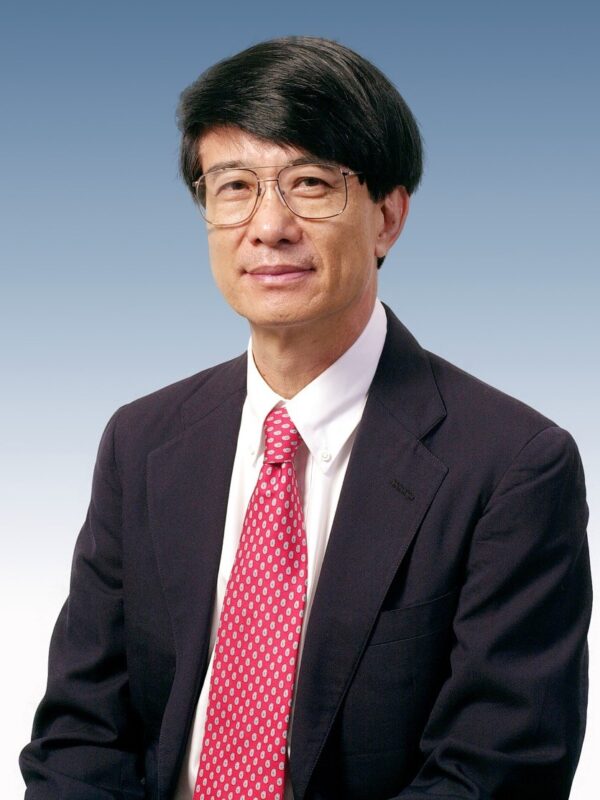
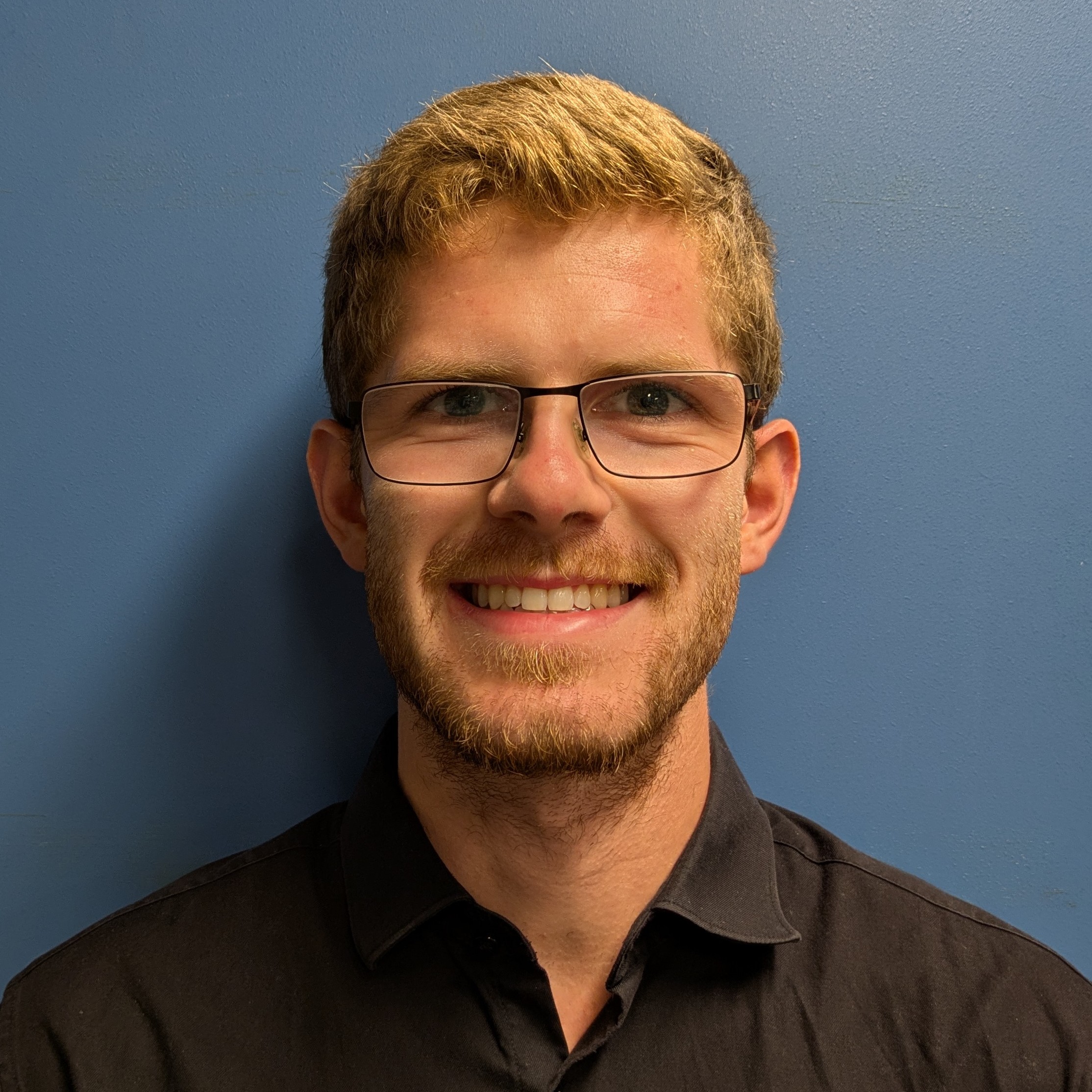
Paul C. W. Chu
Professor of Physics, T. L. L. Temple Chair of Science, and Founding Director and Chief Scientist, Texas Center for Superconductivity at the University of Houston
President Emeritus and University Professor Emeritus, Hong Kong University of Science and Technology
Dr. Paul C. W. Chu currently serves as Professor of Physics, T. L. L. Temple Chair of Science, and Founding Director and Chief Scientist of the Texas Center for Superconductivity at the University of Houston. He is President Emeritus and University Professor Emeritus of Hong Kong University of Science and Technology.
He has been working on the physics of superconductivity and related materials for 60 years. In January 1987, he and his colleagues achieved superconductivity at 93 K (-180 °C), above the boiling point of liquid nitrogen (-196 °C), making its commercialization more practical, and they continue to hold the current record high transition temperature of 164 K (-109 °C) in another compound when compressed. They recently achieved the record high ambient-pressure transition temperature of 151 K (-122 °C) in this compound following pressure-quenching. Presently, he is actively engaged in the basic and applied research of high temperature superconductivity. His research activities extend beyond superconductivity to magnetism and dielectrics. His work has resulted in the publication of more than 750 papers in refereed journals.
He has been elected as a member of several prestigious national academies of science of the U.S. and other countries. He has received numerous awards, including the U.S. National Medal of Science, and has served on many different professional committees.
Presentation title: Celebrating the 40th Anniversary of HTS: Past, Present, and Future
Presentation time: 8:05-8:50 AM
Abstract: View Here
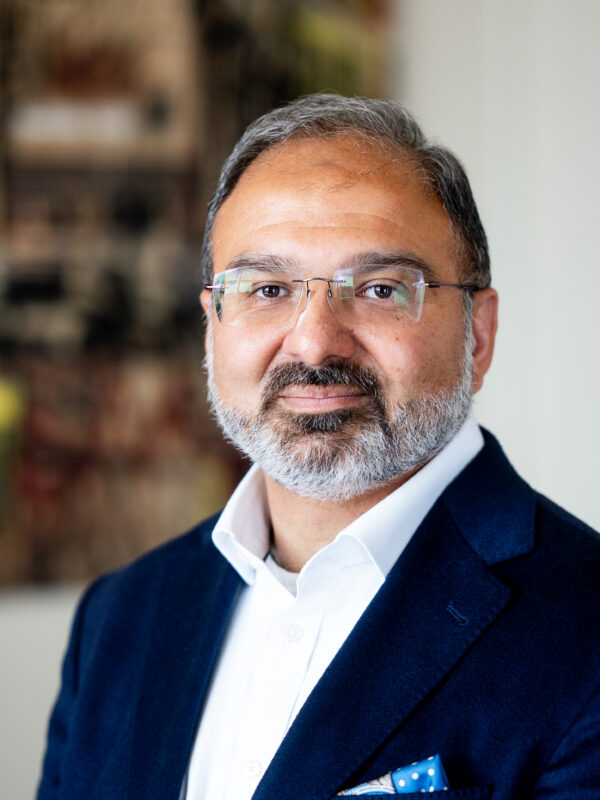
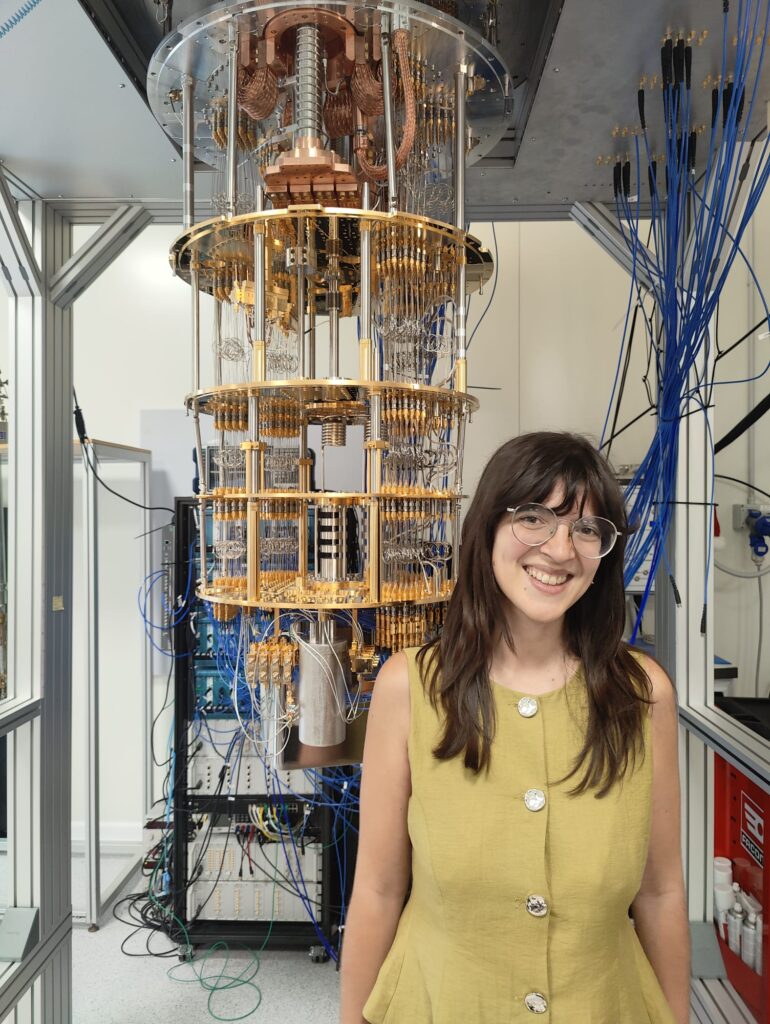
Irfan Siddiqi
University of California-Berkeley, Department of Physics
Irfan Siddiqi is the head of the Physics Department at UC Berkeley where he is the Douglas Giancoli Chair Professor. He is also a professor of Electrical Engineering and Computer Science, and a Faculty Scientist at Lawrence Berkeley National Laboratory. Irfan received his undergraduate degree in chemistry & physics at Harvard University, and a PhD in applied physics from Yale University. His research group focuses on the development of advanced superconducting circuits for quantum information processing, including computation and metrology. Irfan is also the director of the Advanced Quantum Testbed at LBNL, which develops and operates full-stack quantum computing platforms based on superconducting qubits. He is known for key contributions to quantum measurement science, including real time observations of wavefunction collapse, tests of the Heisenberg uncertainty principle, quantum feedback, and the development of a range of microwave frequency, quantum noise limited amplifiers and detectors. Irfan is a fellow of the American Academy of Arts and Sciences and the American Physical Society. He is the recipient of the APS George E. Valley prize and the Joseph F. Keithley Award. He is also a recipient of the Berkeley Distinguished Teaching Award—the university’s highest award for commitment to pedagogy.
Presentation title: Quantum Computing: Towards the Road to Advantage
Presentation time: 4:15-5:00 PM
Abstract: View Here
Tuesday, September 8, 2026
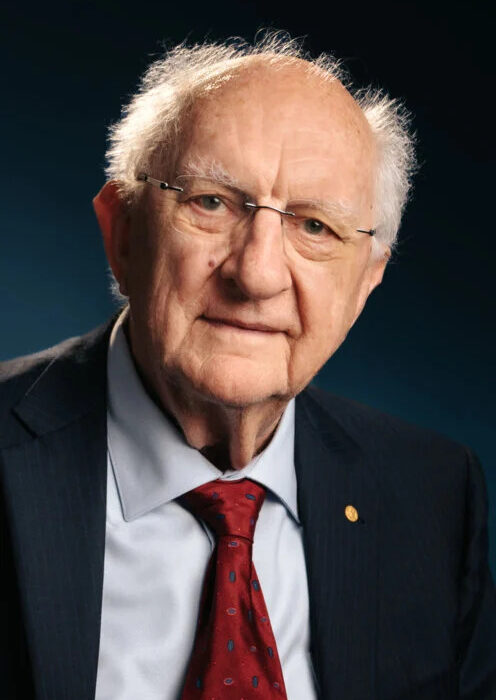
John Clarke
University of California-Berkeley, Department of Physics
Awardee of the 2025 Nobel Prize in Physics
John Clarke is a co-recipient of the 2025 Nobel Prize in Physics for the discovery of macroscopic quantum mechanical tunnelling and energy quantization in an electric circuit. He is Professor of the Graduate School in the Department of Physics at the University of California, Berkeley, where he has been a faculty member since 1969, and held the Luis W. Alvarez Memorial Chair for Experimental Physics from 1994 to 1999. He received his B.A. (1964), Ph.D. (1968), and Sc.D. (2003) from the University of Cambridge.
His research centers on the theory, design, and applications of superconducting quantum interference devices (SQUIDs). He is particularly known for fundamental studies of 1/f flux noise in SQUIDs, which has been central to understanding decoherence limits in superconducting quantum circuits. His work also spans SQUID-based geophysical survey techniques, high-transition-temperature SQUIDs, SQUID amplifiers for axion dark matter searches, ultralow-frequency MRI, and the readout of superconducting flux qubits for quantum information processing.
His honors include the Alfred P. Sloan Foundation Fellowship (1970), the John Simon Guggenheim Fellowship (1977), the Charles Vernon Boys Prize of the British Institute of Physics (1977), California Scientist of the Year (1987), the Fritz London Memorial Award for Low Temperature Physics (1987), the IEEE United States Activities Board Electrotechnology Transfer Award (1995), the Joseph F. Keithley Award for Advances in Measurement Science of the American Physical Society (1998), the Comstock Prize in Physics of the National Academy of Sciences (1999), the IEEE Council on Superconductivity Award for Significant and Continuing Contributions to Applied Superconductivity (2002), the Scientific American 50 Award (2002), the Hughes Medal of the Royal Society (2004), and the Micius Quantum Prize (2021), awarded for pioneering superconducting quantum circuits and qubits.
He is a Fellow of the Royal Society of London, the American Physical Society, the Institute of Physics (U.K.), the American Academy of Arts and Sciences, and the American Association for the Advancement of Science, and an International Member of the National Academy of Sciences. He holds Honorary Fellowships at Christ’s College, Cambridge (1997) and Darwin College, Cambridge (2023).
Presentation title: From SLUGs to Macroscopic Quantum Phenomena
Presentation time: 8:00-8:45 AM
Abstract: View Here
Wednesday, September 9, 2026
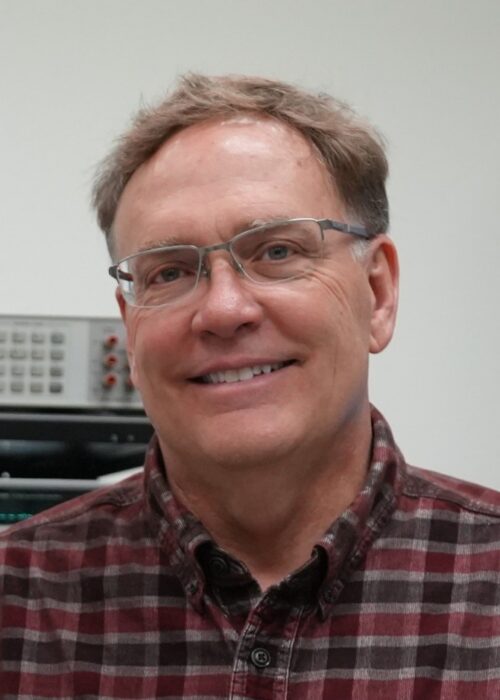
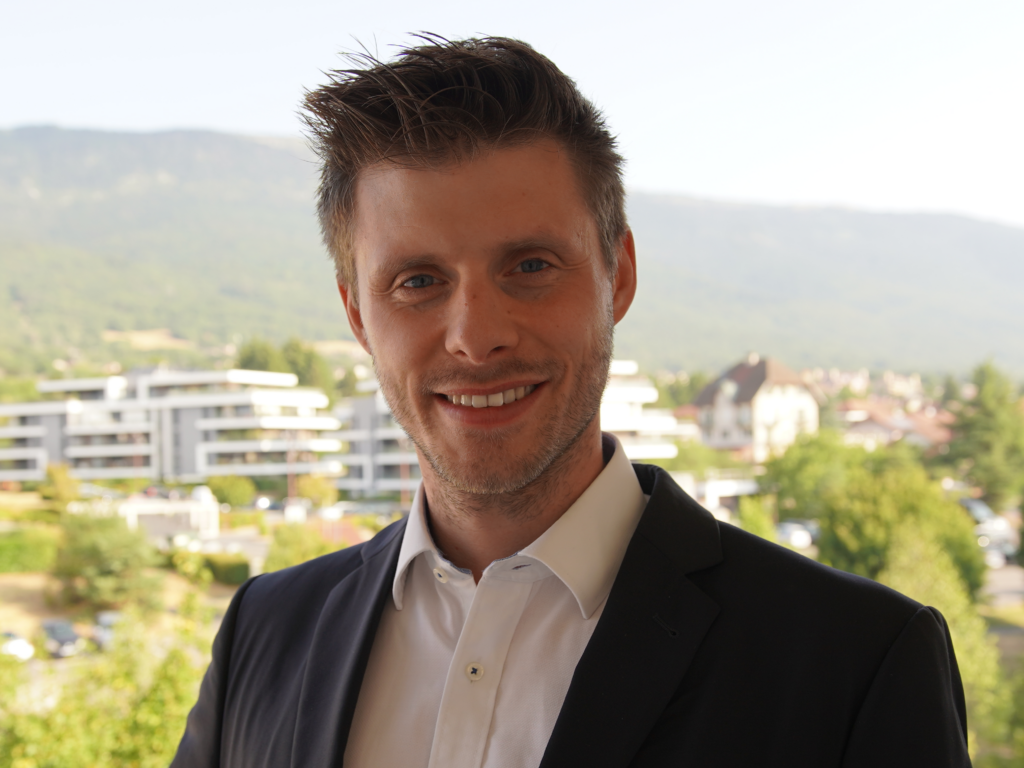
Samuel Benz
NIST, Superconductive Electronics Group
Sam Benz is a NIST Fellow in the Superconductive Electronics Group that develops state-of-the-art dc, ac, and RF superconducting quantum-based voltage sources, standard reference instrument systems, and precision measurement techniques that NIST provides to U.S. Industry and national and international measurement laboratories. The group also has research programs in superconducting high-speed computing, quantum computing, and radio-frequency communications.
Sam was raised in Dubuque, Iowa, on the Mississippi River. He received his B.A. from Luther College, Decorah, IA, in 1985 and his Ph.D. degree in physics from Harvard University in 1990. He is a Fellow of NIST, the American Physical Society (APS), and the Institute of Electrical and Electronics Engineers (IEEE). He has five patents and three U.S. Department of Commerce Gold Medals and received the 2016 IEEE Joseph F. Keithley Award in Instrumentation and Measurement. He is currently president-elect of the IEEE Council on Superconductivity.
Presentation title: The Quantum Volt: How the Josephson Effect Revolutionized Standards and Measurement
Presentation time: 8:00-8:45 AM
Abstract: View here
Thursday, September 10, 2026
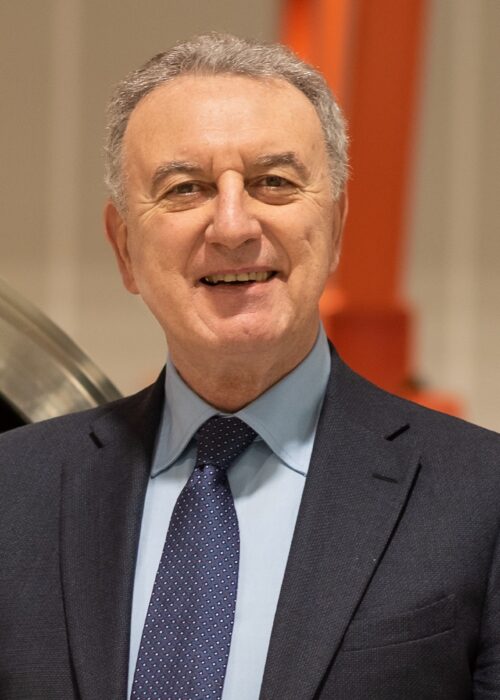
Lucio Rossi
University of Milan / INFN – Istituto Nazionale di Fisica Nucleare
Lucio Rossi is Professor of Accelerator Physics at the University of Milan and Research Associate at INFN. He is internationally recognized for his contributions to superconducting magnets for particle accelerators and large research infrastructures. During the 1990s, he played a leading role in the development of the first full-scale prototypes of the Large Hadron Collider (LHC) superconducting dipoles and contributed to the construction of the ATLAS detector magnet system.
In 2001, he joined CERN to lead the Magnet and Superconductor Group for the LHC project, which he guided through construction, installation and commissioning phase until 2011. He subsequently conceived and directed the High-Luminosity LHC (HL-LHC) project from 2010 to 2020, establishing the international program that is now delivering the major luminosity upgrade of the world’s highest-energy accelerator.
Since returning to Italy in 2020, Rossi has focused on advanced superconducting technologies for future accelerators, medical applications, and sustainable energy systems. He is the founder and coordinator of IRIS, Italy’s national research infrastructure for applied superconductivity, and holds leading roles in several European and international programs on high-field magnets, HTS technologies and hadron therapy gantry R&D.
Rossi is an IEEE Fellow, recipient of the IEEE Award for Continuing and Significant Contributions in Applied Superconductivity, the EPS Rolf Wideröe Prize, and the Enrico Fermi Prize of the Italian Physical Society. He has authored more than 200 scientific publications and delivered numerous invited plenary lectures worldwide. He is also active in scientific outreach and served as an IEEE Council on Superconductivity Distinguished Speaker during 2012–2013.
Presentation title: Collaboration Modes in Superconductivity, Applications to Large-Scale
Presentation time: 8:00-8:45 AM
Abstract: View Here
Friday, September 11, 2026
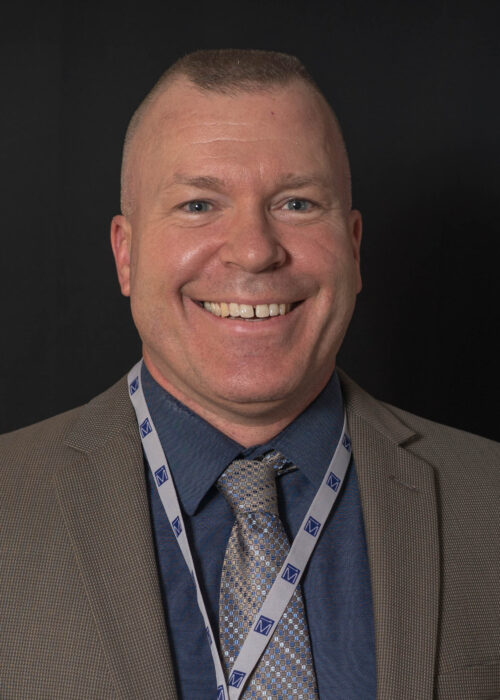
Timothy Murphy
Deputy Director of Operations, National High Magnetic Field Laboratory, FSU
Tim Murphy is Deputy Director for Laboratory Operations at the National High Magnetic Field Laboratory (NHMFL), where he has served in technical, management, and leadership roles since joining the MagLab in 1994. Trained as a physicist, he earned an M.S. in Physics from North Carolina State University and a B.S. in Physics from Loras College. His research has focused on magnetism and superconductivity in correlated electron materials at ultra-low temperatures and high magnetic fields, alongside the development of advanced instrumentation for high-field experiments, including temperature sensors and sample-positioning systems. Tim played a central role in developing the NHMFL Millikelvin Facility and has deep expertise in cryogenic systems, high-field superconducting magnets, and experimental design. He is also widely engaged in education and outreach, having taught and organized the NHMFL Users Summer School, mentored students through the NSF REU program, and contributed to public-facing science communication. A 2024 American Physical Society Fellow, Murphy is recognized for contributions that bridge scientific innovation, facility operations, and community engagement.
Presentation title: Materials Unlock the Future: Using High Magnetic Fields as a Tool to Expand the Scientific Frontier and Raise the Ultra-High Field Limit in Magnets
Presentation time: 8:00-8:50 AM
Abstract: View Here
ELEVATE Early Career Plenary Speakers
As part of the ELEVATE Program and its mission to promote professional and leadership development, the Early Career Plenaries event will be held at ASC 2026. This event continues the tradition established by the successful Young Scientist Plenary sessions at previous ASC and MT conferences, offering early career researchers making significant contributions to applied superconductivity the prestigious opportunity to present short plenary talks showcasing their achievements or visions for the future of the field.
Early career speakers will be selected based on their demonstrated excellence, leadership potential, and recognition within the superconductivity community. The Organizing Committee believes these presentations enrich the conference experience by showcasing innovative ideas, emerging research directions, and the fresh perspectives of the next generation of scientists.
Session Information
Monday, September 7, 2026
5:00 – 6:00 p.m.
Meet Our Early Career Plenary Speakers are:
|
Max Pröpper |
Max Pröpper is a postdoctoral researcher in the group of Shane Cybart at the University of California (UCR), Riverside. He received his M.Sc. in Electrical Engineering from the Technische Universität Braunschweig, Germany, followed by a Doctor of Engineering in 2026 at the Institute for Electrical Measurement Science and Fundamental Electrical Engineering with dissertation entitled He-FIB Josephson Junction Arrays for a High-Temperature Voltage Standard at the same university. In March 2026 he joined UCR where he continues working on superconducting electronics. His current projects include HTS and LTS materials and their device physics Presentation title: Fabrication of Josephson Junction Arrays and Circuit Editing by Focused Helium Ion Beam |
|
Roberta Satariano |
Roberta Satariano is a junior researcher/assistant professor (RTDA) at the Physics Department of the University of Naples Federico II. She works in the Quantum Computing Napoli lab as an experimental physicist studying the Josephson effect in hybrid superconducting systems. Her work combines expertise in materials science, cryogenics, and ultra-low-noise measurement at millikelvin temperatures. She has led the conception, fabrication, and characterization of magnetic Josephson tunnel junctions, enabling scalable Nb-based cryogenic memory elements and the first Al-based ferromagnetic tunnel junctions with quality factors matching state-of-the-art quantum circuits. These results were fundamental to the EIC Pathfinder project FERROMON, within which she led the development of submicrometer Al-based ferromagnetic Josephson junctions and their integration into multi-qubit platforms with industrial partner Quantware — culminating in the first “Ferromon Soprano” chip. She has also advanced the understanding of superconductor/ferromagnet interfaces, publishing the first experimental demonstration of inverse proximity effects at the nanoscale as first author in a Nature-group journal. Presentation title: Ferromagnetic Tunnel Josephson Junctions: A Route Towards Hybrid Quantum Hardware |
|
Raphael Unterrainer |
Raphael Unterrainer is a physicist at CERN working on ultra-high-field superconducting magnets (40+ T) for future accelerators. He completed his PhD at TU Wien, where his research focused on the effects of neutron irradiation on REBCO high-temperature superconductors, their performance in demanding radiation environments, and mitigation strategies, resulting in several well-received publications. His work combines experimental physics, materials science, and engineering, with a particular interest in translating fundamental understanding into practical solutions for technical challenges. Bridging the gap between HTS physics and reliable, high-field magnet hardware requires awareness of material limits and their origin, linking them directly to engineering reality. A central part of his role is coordinating across disciplines, working with technicians, engineers, and physicists to bring high-field concepts from the notepad to operational test infrastructure. To accelerate development and cross-check simulation results, he focuses on practical, fast-to-implement solutions, enabling rapid yet robust progress. Presentation title: HTS Magnets: From Breaking Limits to Building the Future |
|
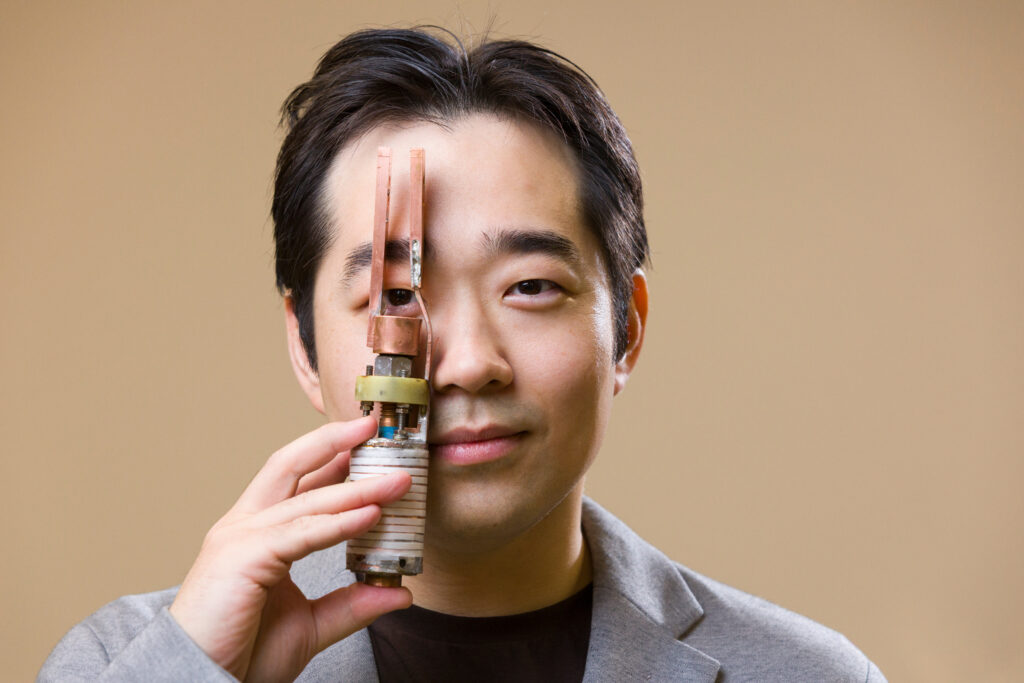
|
Jeseok Bang is a Research Faculty at the Applied Superconductivity Center (ASC), National High Magnetic Field Laboratory (Florida State University). His research focuses on high-temperature superconducting magnets, particularly REBCO conductors for high-field, high-stress applications, including fusion energy systems, NMR/MRI magnets, and advanced scientific instrumentation. As the REBCO coil group leader at ASC, his leadership drives the comprehensive, integrated conductor-to-coil research program, the ‘Little Big Coil’ program, while aiming for >50 T. He received his Ph.D. in Electrical Engineering from Seoul National University in 2022. Dr. Bang has led and contributed to multiple DOE, NSF, and industry-supported projects involving superconducting magnet design, screening-current physics, mechanical reliability, digital twins, and AI-enabled modeling. He has authored more than 50 peer-reviewed publications, holds several patents, and received numerous honors, including the 2024 Jan Evetts SUST Award, Outstanding Reviewer Awards from IOP Publishing, and Seoul National University’s Distinguished Dissertation Award. Presentation title: The Path to 50 T with REBCO Magnets: Lessons Learned from Little Big Coil Tests |
|
Nicolò Riva |
Nico Riva is a physicist and magnet engineer at Proxima Fusion, where he leads the mighty Electromagnetic Modelling Design and Testing (EMDT) team. After studying physics in Milan and completing a PhD in applied superconductivity at EPFL-KIT, he joined MIT’s Plasma Science and Fusion Center, where he worked on designing and testing non-planar superconducting coils and cables for fusion devices. He is grateful for learning from diverse people and environments across EPFL, MIT and the wider fusion community and now Proxima; those experiences shaped both his thinking and his commitment to turning research into hardware. Fun fact: before committing to physics and engineering, Nico worked as a professional musician for a few years and that artistic background still shapes his creative approach to engineering, for better or worse! Today, his work moves continuously between models and experiments to make complex superconducting magnets more reliable. Presentation title: From Simulation to Hardware and Back: One Year of HTS Magnet Iteration |
|
Shaon Barua |
Shaon Barua is a Postdoctoral Research Scientist at the Applied Superconductivity Center of the National High Magnetic Field Laboratory in Tallahassee, Florida. His research covers several classes of superconducting materials, including Bi-2212, MgB₂, and NbTi. He earned his Ph.D. in Materials Science and Engineering from Florida State University in 2024, where he studied critical current distribution in Bi-2212 round wire, a promising high-temperature superconductor for magnets above 25 T. His work showed how overpressure processing, filament geometry, and oxygen doping affect supercurrent path connectivity. His current research focuses on Bi-2212 conductor development for high-field solenoid and accelerator magnets. As part of the US Magnet Development Program, he collaborates with national labs and industry partners on Rutherford cable development for canted cosine theta coils. Before joining NHMFL, Shaon worked on carbon doping and high-pressure processing of MgB₂ conductors at the University of Wollongong, Australia. In 2022, he received the IEEE CSC Graduate Study Fellowship for materials research in applied superconductivity. Presentation title: Bi-2212 Conductor for Next-Generation High-Field (>25 T) Magnets |
|
Tugrul Ersoz |
Tugrul Ersoz is a Research Fellow at the University of Birmingham’s School of Metallurgy and Materials, where he develops additive manufacturing routes for superconducting and refractory metals. His PhD, completed in 2025, established laser powder bed fusion as a viable production route for Nb47Ti: in-situ alloying from elemental powders, combined with a controlled ω→α-Ti ageing response, delivered critical current densities of 14.6 kA/mm² at 4.2 K and 5 T, close to 80% of the theoretical limit for NbTi. He then built the first 3D-printed NbTi superconducting microwave cavity, reaching loaded Q-factors above 6×10⁵ and holding superconducting behaviour in applied fields to 0.3 T. Cavities and resonators have since followed for groups at UWA, Cardiff and ETH Zürich. He now leads an EPSRC Impact Acceleration Account Early Career Award to commercialise the technology, and welcomes collaborators with superconducting geometries that cannot be drawn, wound or machined. Presentation title: Metal 3D Printing of NbTi Superconductor Components |